Taking On the Centennial Trail – Alkali Creek to Dalton Lake
Nestled within scenic Vanocker Canyon, Elk Creek is the fourth trailhead going south along Centennial Trail and the next starting point for my journey across this 111-mile trail through the Black Hills. To reach this trailhead, it is a 6.5-mile drive from Sturgis on Vanocker Canyon Road, followed by 2.5 miles on Runkle Road. Driving through Vanocker Canyon is always a fun experience and I assumed reaching the trailhead would be easy enough. However, I soon realized that my day’s adventures would begin before I even got on the trail.
For the first two miles, Runkle Road is a well-maintained gravel road that I had no trouble driving on in my car. But then the last half mile turned into more of a mountain logging road with lots of rocks, steep grades, and deep, washed-out ruts. I was able to navigate around the worst spots until I could finally see the trailhead up ahead. Just a few yards before I reached the parking area, though, there was a trench across the road deep enough that I knew my car wouldn’t have enough clearance to cross. I think most trucks or SUVs would have been able to get by it okay. Unfortunately for me, I had to make a U-turn, park on the side of the road, and walk the short distance to the trail.
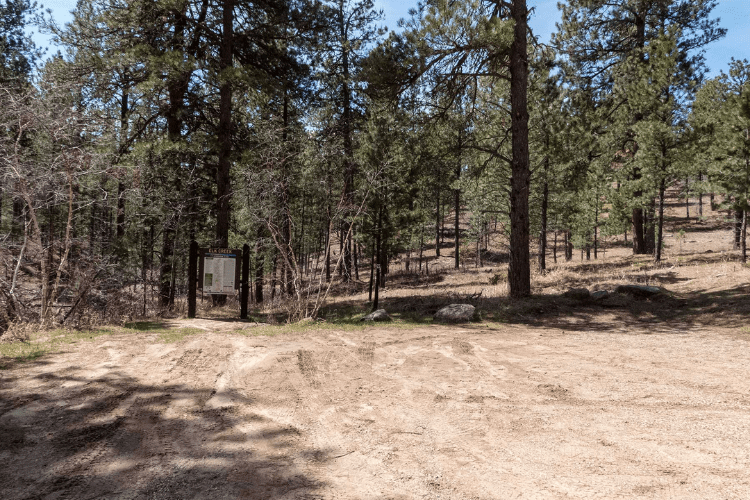
The trailhead itself is just a small parking area with a map of Centennial Trail. Unlike the previous three trailheads I have visited, there are no restrooms, picnic tables, or benches. From Elk Creek to the next trailhead at Dalton Lake is 12.8 miles according to the map, making this the longest single section of Centennial. Since I wouldn’t be able to walk the entire length out and back, my goal for the day was to try to reach the half-way point in under three hours.
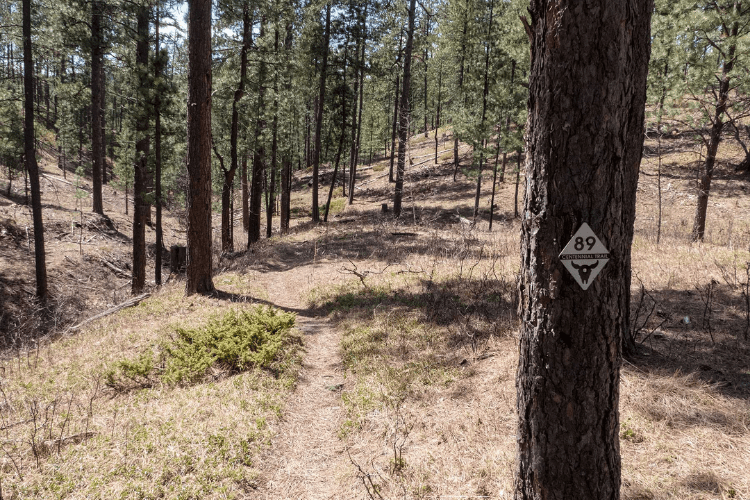
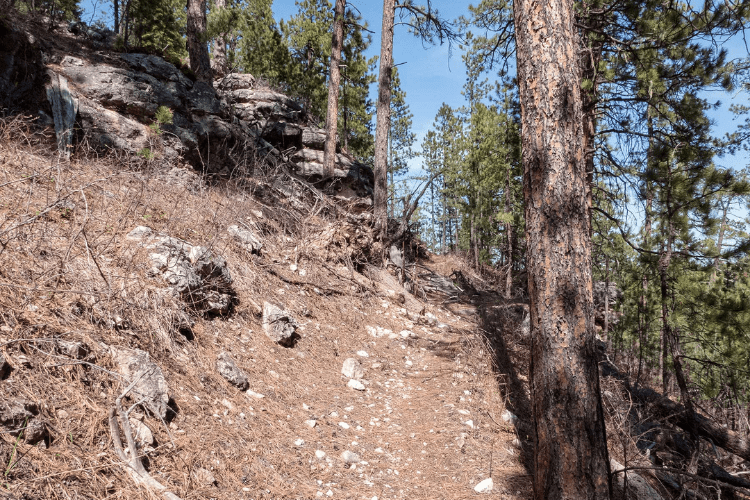
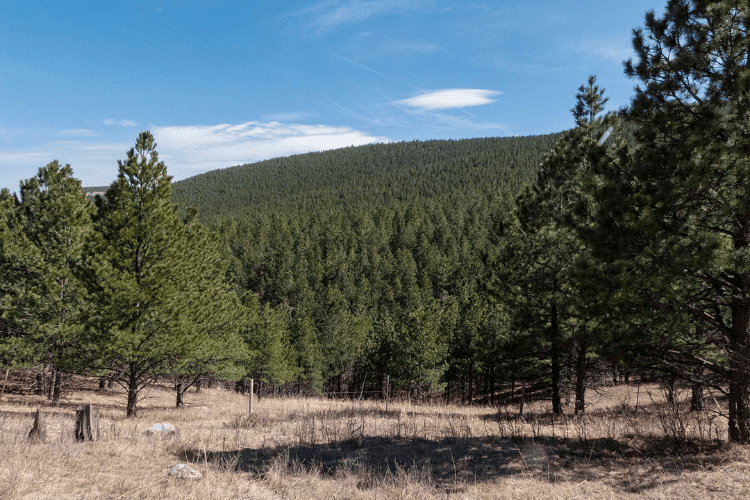
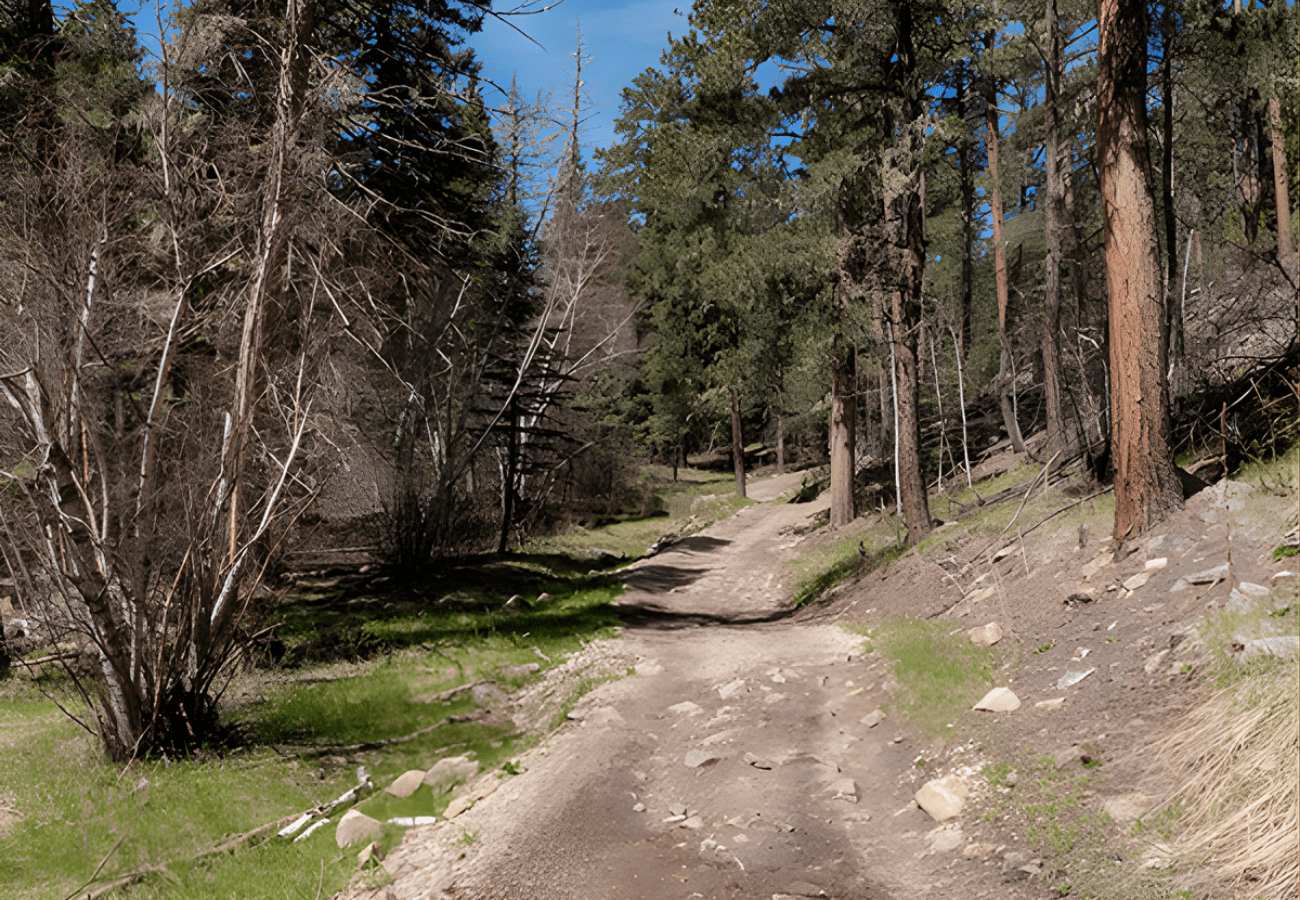
Right from the beginning, the trail led into a sparse forest with patches of grassy areas, then ran beside a narrow gorge off to the left. The woods gradually became thicker the further I went. There were a few short ups and downs on the trail early on, but for the most part this was a rather pleasant walk.
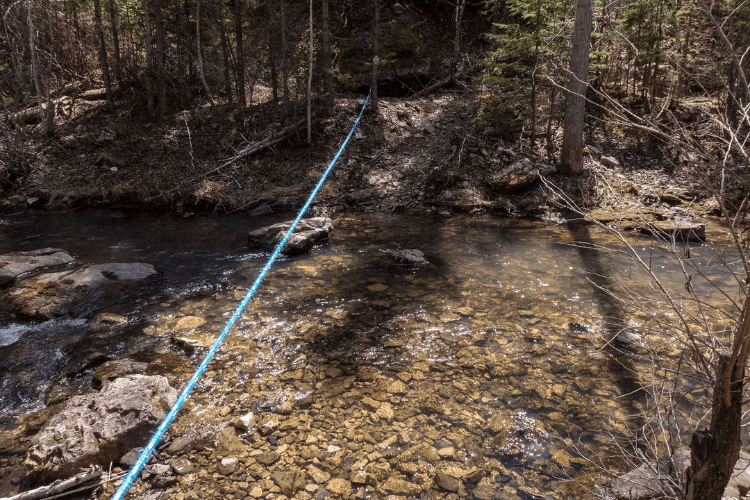
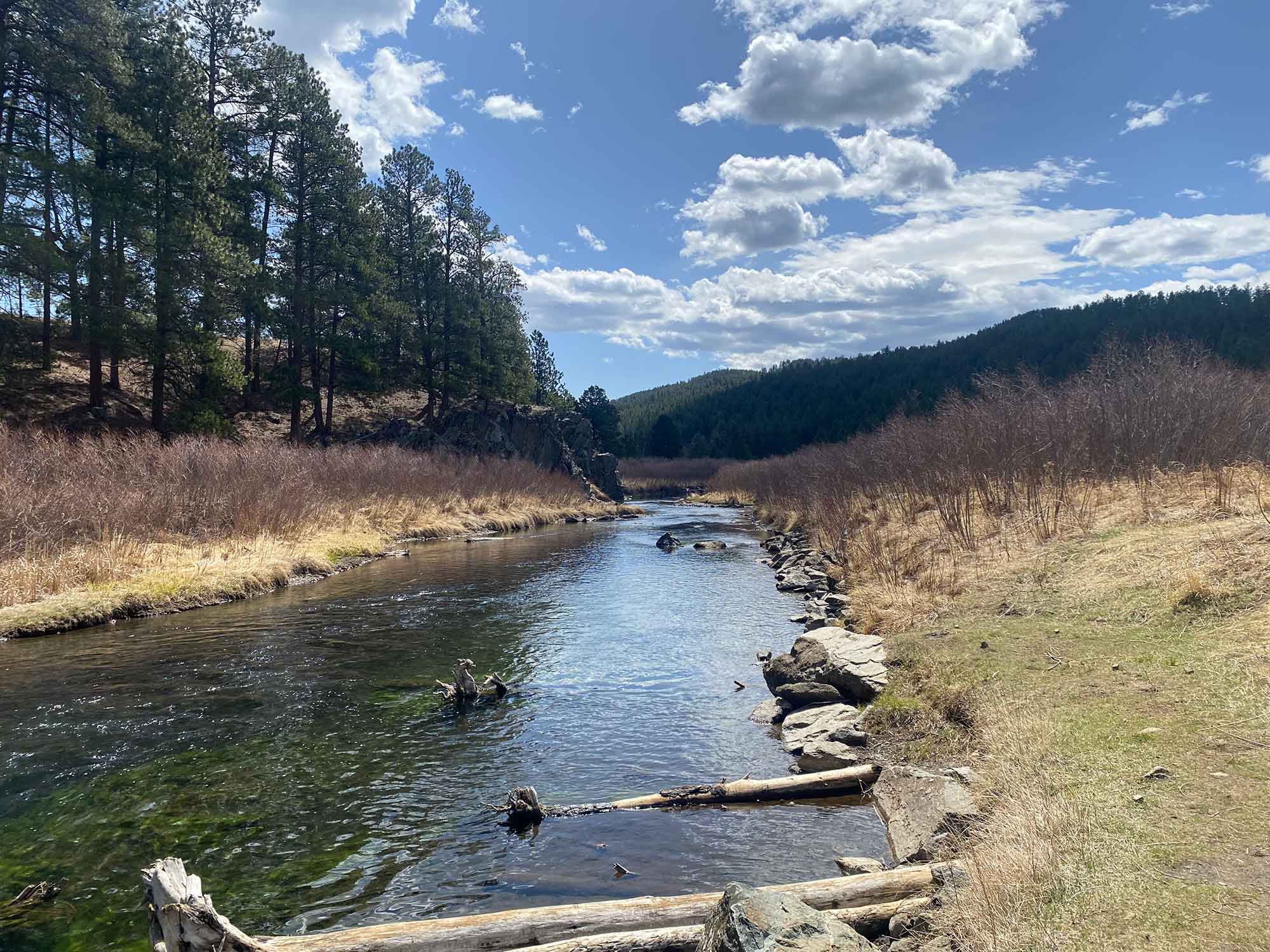
Within about a mile, the trail dropped to the canyon floor and I got my first up-close look at Elk Creek. Then I got to make my first water crossing of the day. There wasn’t a bridge over the creek, just a rope tied between two trees spanning the water to help me balance as I maneuvered across the rocks trying not to get my feet too wet. The first crossing wasn’t bad, but there were four more water crossings to go as the trail ran along the bottom of the canyon. None of the five crossings have bridges, but they all had ropes to lean on if you choose to use them. Trying to find rocks to hop across was difficult, though, and I stepped into the water on more than one crossing. By the time I made the last crossing, my socks and shoes were pretty much soaked.
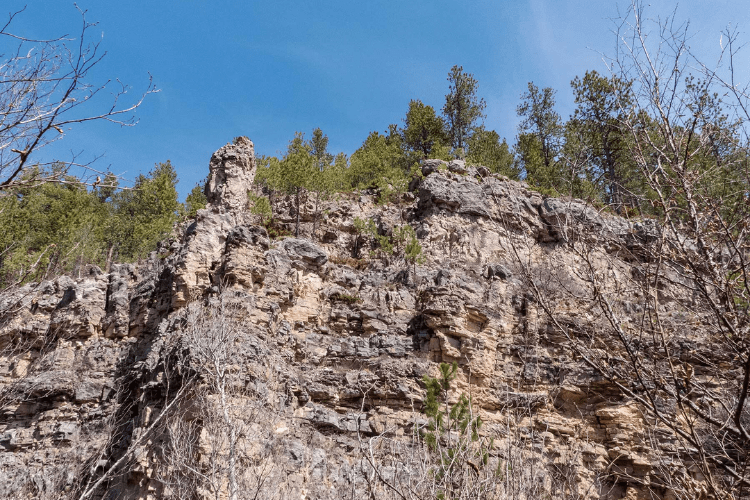
After about a mile of walking beside, and through, Elk Creek, the trail finally started to climb up again. Over the next two miles, Centennial Trail wound its way through the canyon. There were a lot of steep sections here and a few switchbacks to keep the hike interesting. There were also some nice views of the canyon walls that I could see through the trees across from the trail.
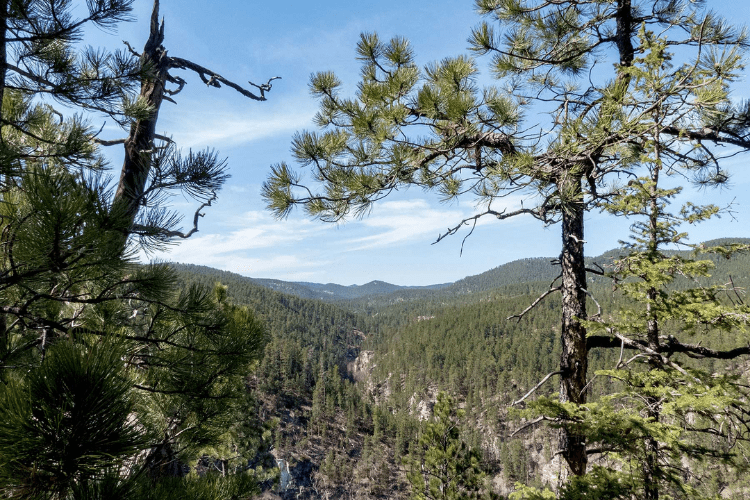
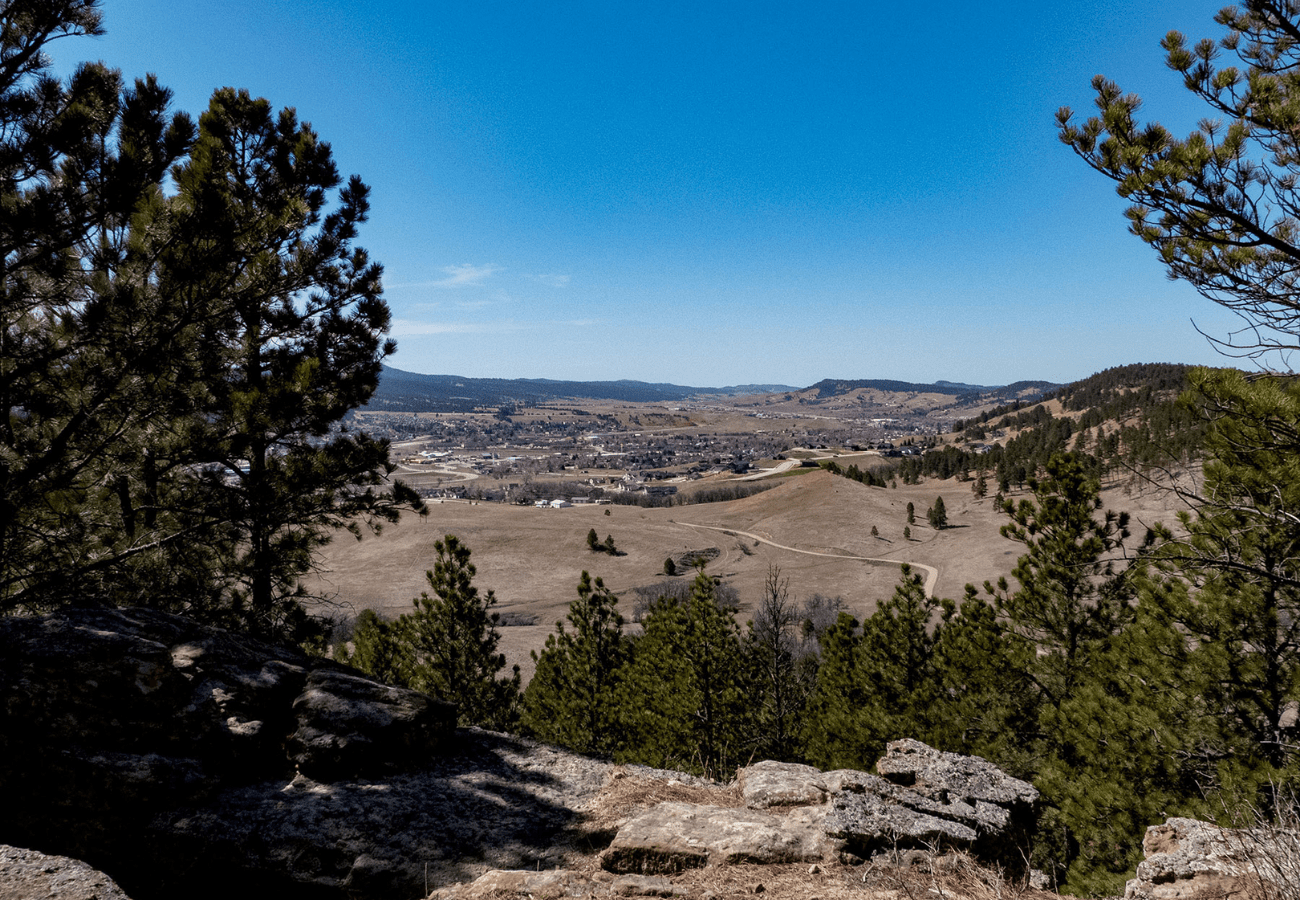
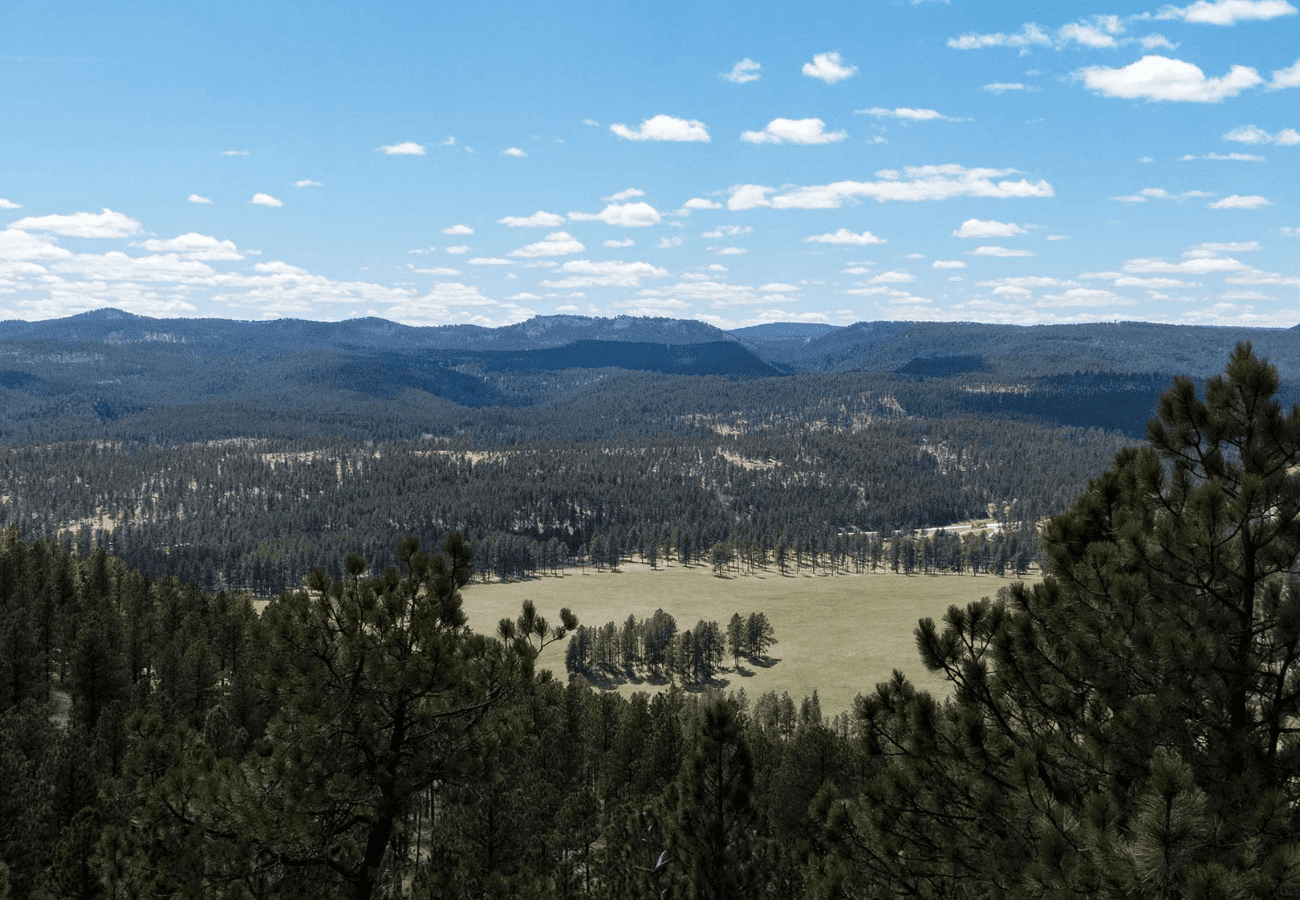
By about four miles into the hike, the trail began to lead out of the canyon and higher into the hills. There were even more great views looking back into the canyon that were worth stopping to see. A few spots offered some really clear views of the length of the canyon.
As I got closer to my turnaround time of three hours, I started looking for a memorable spot to be my halfway point. Unlike previous sections of Centennial Trail, though, I didn’t come across any historical sites or interesting locations. This hike really was all about experiencing the wilderness of the Black Hills. And I was more than okay with that. Finally, at a little more than six miles from the trailhead, I decided to stop and begin the hike back to my car.
When I finally made it back to the Elk Creek Trailhead, I had walked about 12.5 miles, climbed over 1200ft in elevation, and spent close to five and a half hours on the trail. Once again, this section of Centennial Trail was clearly marked easy to follow. This time I didn’t see any other trails intersecting, so there wasn’t really any chance of wandering onto the wrong trail. Just like the previous section, this was definitely a challenging hike with lots of steep grades and loose rocks, but probably not too difficult for most hikers. The most difficult parts were certainly the five water crossings. Depending on the time of year and how high the water is, you are pretty much guaranteed to get your feet wet on this trail. But that’s just something that comes with exploring the great outdoors in the Black Hills.